
You’re hiked low in the grass, scouting around quietly. You spot a group of zombies – no more than 5 – aimlessly wandering nearby. You make each footstep count, avoiding their line-of-sight as you creep by. As you pull out your newly-crafted bow-and-arrow, you watch in horror as the game engine stutters for a moment. Despair sets in as your character falls through the ground, killing them in the void under the game level. 5 hours have just gone to waste.
You paid $60 for this?
Alpha-Beta-Early-Access
Shoddily crafted, survival/exploration games are nothing new to modern gamers. Ever since DayZ hit entertainment by storm in 2013, hundreds of bottom-barrel imitators and duplicators have been force-fed to shoppers and players everywhere. Steams introduction of Early Access titles in March of the same year has done nothing but enable poor products to reach consumers faster, with many other storefronts on consoles and PCs both followed suit. One can ask any gamer if they’ve made a regretful pre-purchase and nearly everyone would have a mistake that still plagues them (Mighty No. 9 still keeps me up at night).
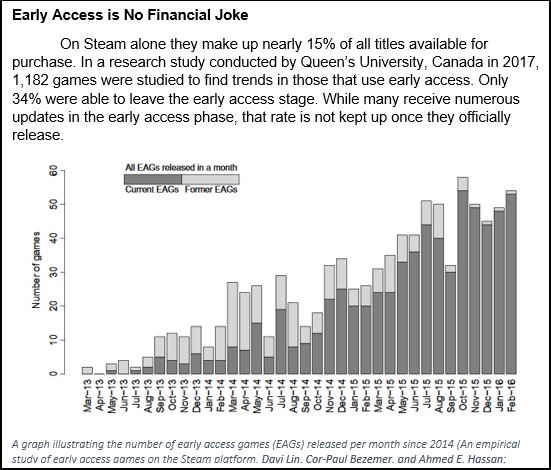
Indeed, Early Access titles seem to be a fantastic way to make cash for both AAA and indie developers; if you can make sales before a product is finished, why wouldn’t you? However, the get-rich-quick scheme of abysmal Early Access titles can only be the conman flavor of the month for so long, something new will have to replace it.
Enter: minimum viable product development.
MVP, not PVP
If you aren’t from the tech background, minimum viable product development (MVP) may mean nothing to you. Coined by Frank Robinson of SyncDev in 2001, the premise of an MVP is simple: you create the lowest denominator product that creates a positive experience. Once it is received well, and your pocket is a bit heavier, you go back and reiterate again, improving it for new users.
This might sound like what Early Access titles are, and the definition admittedly has plenty of overlap. MVP’s can slot nicely into the Early Access architecture offered by many marketplaces, but the distinction is in the execution. Early Access, as stated by Valve in their Steamworks documentation, is defined as: “Releasing a game in Early Access helps set context for prospective customers and provides them with information about your plans and goals before a ‘final’ release.” MVP’s on the other hand should have a completed project together that just fully satisfies the audience; think a perfect “5.5/10” game with an interesting premise or concept that would be fun with a second round of polish but doesn’t need it.
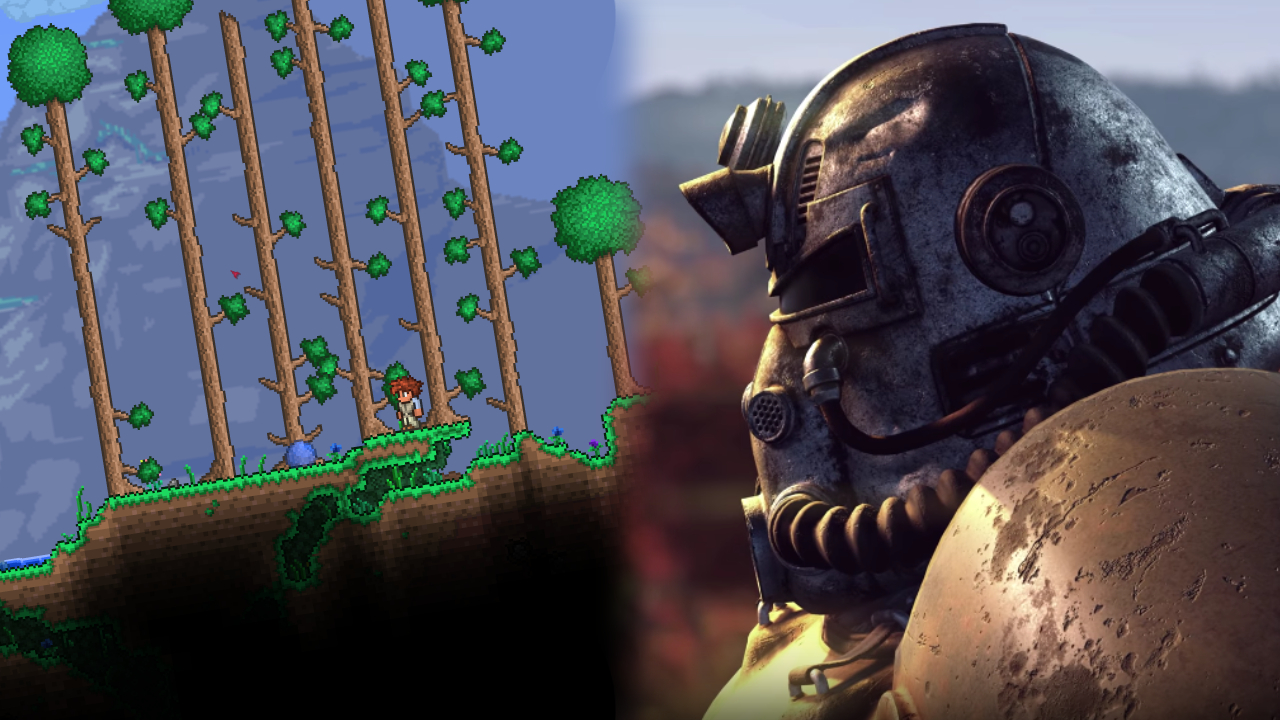
Perhaps the best way to illustrate how MVP development can be used in video game development is with concrete examples of it being done, both poorly and excellently. For the poor example, we will dive into the raging radioactive wasteland that is Fallout 76. As for the yang to 76’s yin, we will touch on the “Minecraft-clone” transformed to indie gem Terraria. Both titles help illustrate the pitfalls and benefits MVP development brings, as well as illustrate the overall trend to these types of releases. Grab your canvas bag, because this will get spicy.
Seventy-Six Deadly Sins
Fallout 76 has had a… less than stellar launch. Once announced in June of 2018, it swept the Internet by storm in how exotic it was compared to previous titles developed by Todd and friends (multiplayer in a Bethesda game? What!?). However, as details emerged it became clear that 76 was going to be a more precarious investment for gamers. Details pried from the mouths of tight-lipped developers revealed that the title would take a step back from its series’ famed storytelling and character writing; instead YOU would be the characters!
This premise worked well for 76, until the cracks started to seep through the scorched earth. The aging Creation Engine that game was built on struggled to deal with the added stress of multiplayer connectivity. Design elements of the title left players puzzling, as world felt empty without characters to interact with, the PVP system left more than a lot to be desired, and the entire game’s high-level content—launching Nukes—was conquered on the first day. But where Bethesda truly went wrong wasn’t in the game flaws, although much of the game design is damn confusing, but in the response to these issues and community criticisms.
The first spark to the dumpster fire came with the bags from the collector’s editions of the game. Fans quickly found out they were nylon rather than canvas, and outrage erupted. Bethesda handles the issue by blaming a material shortage, an excuse that doesn’t satiate the let-down players. The game is patched multiple times in the two weeks following its release to try and smooth over frustrations with the many bugs and performance issues, but the tides of hate have already set in. Bethesda apologizes for its lack of communication again and again but continued to make the wrong choices at every turn. In response to the canvas bags Bethesda gives all players 500 atoms – an in-game currency microtransaction. But the cascade of poor PR is uncontrollable. Wrong move after wrong move continues: the drop rates of exclusive items are tuned down in December, Christmas items become available for ludicrous prices, players who contacted support regarding their nylons have their confidential information leaked out; Fallout 76 became a radioactive example of Murphey’s Law in action, crumbling throughout the Holiday season of 2018. It was an absolute dumpster fire.
These failures to control the experience and atmosphere around their product failed what could have been a successful minimum viable gaming product. Instead, Bethesda risked it all for a risky venture. In the months following 76’s release, physical sales were 1/5 of Fallout 4’s and digital were barely half. 76 is also the lowest rated Fallout series title to date: with most outlets giving it a score of less than 5/10 when averaged. Don’t get it twisted, Fallout 76 has been a failure every step of the way, and while Bethesda is trying to redeem themselves with the free atoms, re-shipping canvas bags, planning a major content update for this March and even giving away some of the original Fallout games to players; it may not be enough to save the series and developer’s authority.
Never-the-less, this horror story shouldn’t serve to dissuade the usefulness of MVP’s, or the fact this practice will dominate the gaming scene to come. MVP’s are a natural evolution of utilizing Early Access to its greatest potential, both for cons and for legitimate development (after all, 76 did still sell 1.4 million digital copies by the end of 2018). What proper MVP usage can do for developers beyond sales, though, is trust.
Building (and Rebuilding) a 2D Terrain
Terraria is a title that many gamers would consider one of their best purchases, a title they would trust. Terraria originally released for only $10 on Steam in 2011. At the time it was remarked as a 2D rip-off of Minecraft, with the building and crafting elements linking the series. This didn’t stop its popularity though, as it passed 200,000 sales within 9 days and over 400,000 in a month’s time. Diligent developers Re-Logic stuck through with their product, as their fanbase grew on forums, Steam, Twitter, and Reddit. Developers interacted with fans directly, not through PR corporate accounts, which helped foster a sense of communication and rapport. Re-Logic capitalized on the hype of hitting nearly half a million sales and announced their plans for continuing the game and adding new features. They stated: "You've all helped build a great, huge community here dating back well before pre-release."
Terraria took their outstanding reputation in stride, adding more and more major updates throughout time, inflating the amount of content and gameplay in the title astronomically. By the time Terraria hit version 1.3, it was a staple name in most gamer’s libraries and many more would pick it up each time it was on sale. Terraria has maintained support through 2018, with still more updates coming on the way. By now, Terraria is reported as having sold 27 million copies across all platforms they now support: PC, console, and mobile. Re-Logic has even been able to build on their success and community trust to put out two other titles, Pixel Piracy and Pixel Privateers.
This is the prime example of how an MVP can succeed in game development, and what others will begin following up with now that platforms like Steam support Early Access so heavily. Studios should look to take their novel ideas and create performant first-crack into the marketplace. From here, proper communication from the actual development personalities on community interaction platforms build a trust that create life-long relations with customers.
One last piece to note with MVP development is that it works wonders for small studios, but can be nearly too risky for large, established companies to do. Minimum viable products are usually done when there is not enough capital to establish a perfect product; large AAA developers like Bethesda should not be facing this issue. If they do decide to make the plunge into using MVP development as they Bethesda did with Fallout 76, they have to be able to deliver customer service and compassion that matches the reputation for perfection that customers expect from a Hollywood-tier entertainment titan.
Does MVP = Most Valuable Player?
Certain titles can pull themselves out MVP mediocrity Hell, like Final Fantasy XIV. Other’s fall, for they never quite delivered in the first place like DayZ the standalone game. And some continue to try and pull themselves together today, with relative success (No Man’s Sky has managed to fight its way back to being “Mixed” reviews on the Steam storefront). Whether Fallout 76 will manage to do the same remains up in the air, but for both Bethesda and any aspiring indie developer it is vital to understand what you are getting yourself into with minimum viable product development. After all, the entire reputation of West Virginia could be at stake.